"...the power of the images gently washes through the text"
– Rachel Morley
The novel explores a whole web of intertwined concerns and reflections on the relation between creativity, exile, foreignness, identity, desire, loss and death, leading
to greater awareness and acceptance.
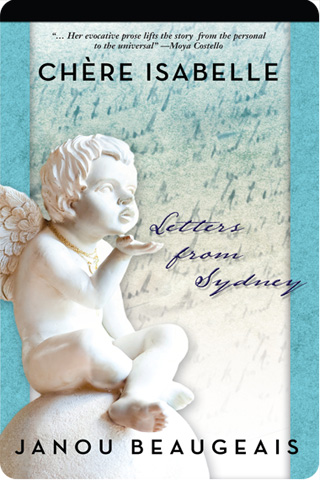
Chère Isabelle deals with death, loss and grief, renewal and regeneration. These twenty-nine letters are written in English by a French woman now settled in Sydney, to her childhood friend in Paris. Dominique and François have been happily living in Australia for more than a decade with their two young daughters, Charlotte and Sophie, and their much-loved dog, Toto. Suddenly François dies, leaving Dominique feeling that once again she is a foreigner in a foreign country. Her life crumbles. She finds herself not only displaced by grief, but also literally by another landscape and culture. Even her children are more Australian than French. How does she cope with the unexpected loss and pain? What will help her to move through the process of grieving? What effect will her struggle have on her identity? Parallel to the ongoing, ordinary events of Dominique’s and Isabelle’s everyday lives, flashbacks in time and memory cause them to reflect on the notions of responsibility and guilt, personal and collective. Dominique also confronts the traumatic events happening in Isabelle’s life that result in the revelation of a shameful secret kept hidden since WWII.
Writing of everyday life, during certain periods of the year of ordinary people, evokes what Roland Barthes has called ‘écriture blanche’ (‘white writing’), or ‘écriture neutre et réaliste’, although realist writing is far from being neutral. Despite the seemingly ‘coolness’ of Dominique, there is a sustained tone of genuine pathos in the heroic way she undertakes her journey through grief, without allowing herself to be sentimental or feel self-pity.